Petrova Taskforce
The Petrova Taskforce was the supreme international body created to address the existential threat posed by Astrophage, an alien microorganism that was consuming the Sun's energy. Formed through a unanimous secret vote of every member nation of the United Nations, the Taskforce was given unprecedented authority to bypass normal bureaucratic and legal processes in order to find a solution with maximum speed. Its leader was Eva Stratt, a Dutch former administrator of the European Space Agency, who was granted what she described as "all of the authority" to commandeer resources, personnel, and territory worldwide without question.
Formation and Authority
The Taskforce was created in response to the confirmation that the Sun's output was decreasing exponentially due to Astrophage, a discovery that threatened global civilization within decades. Stratt was personally tasked with finding a solution, and the international community gave her the power to override national sovereignty, military chains of command, and legal frameworks. She demonstrated this authority by ordering the Russian space agency Roscosmos to land their Soyuz capsule in Saskatchewan, Canada, rather than its usual landing zone, and by having the Royal Canadian Air Force and U.S. military facilitate the rapid transport of Astrophage samples to her lab in San Francisco. When the Intellectual Property Alliance sued the Taskforce for copyright infringement over its decision to copy all digital knowledge onto the Hail Mary's data banks, Stratt appeared in court only to dismiss the case, citing an international treaty granting her personal immunity from prosecution and a preemptive pardon from the U.S. president.
Key Actions and Projects
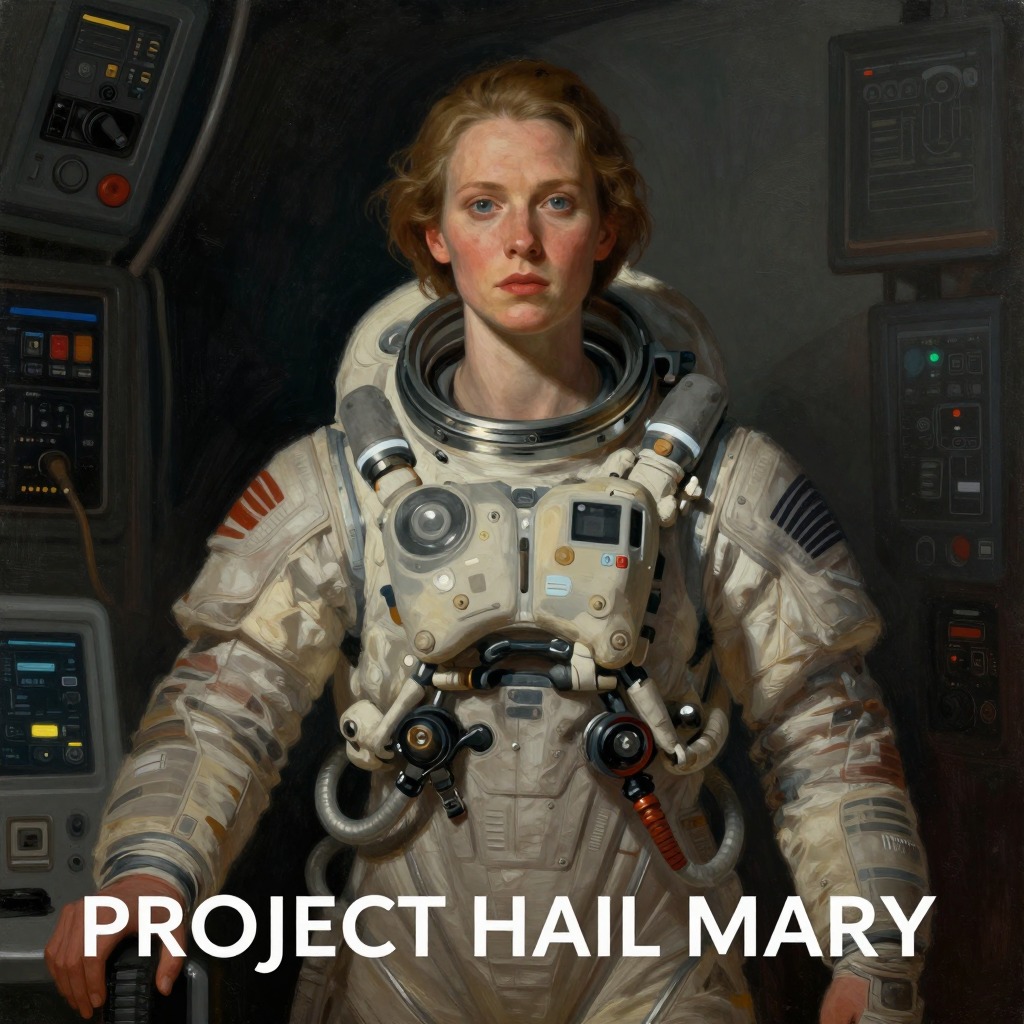
The Taskforce's most critical project was Project Hail Mary, the construction of an interstellar spacecraft to travel to the star Tau Ceti, which appeared immune to Astrophage infection. Stratt assembled a team of the world's leading scientists, including Ryland Grace, a junior high school science teacher and the world's leading expert on Astrophage biology, to design the ship and its mission. The Taskforce also oversaw the mass production of Astrophage fuel through the Sahara Astrophage Farm, a massive array of blackpanels designed by the imprisoned engineer Bob Redell, which covered a significant portion of the Sahara Desert. To buy humanity time while the Hail Mary was en route, the Taskforce authorized a nuclear strike on Antarctica to release methane into the atmosphere, a deliberate act of geoengineering to slow global cooling. Stratt personally made the decision to place the crew in medically induced comas for the journey, a choice driven by the psychological risks of a multi-year suicide mission in a cramped spacecraft.
Legacy and Significance
The Petrova Taskforce represented an unprecedented concentration of global authority in a single individual, justified by the existential nature of the Astrophage threat. Stratt's methods were ruthless and often illegal, but she acknowledged that her authority would end upon the Hail Mary's launch, after which she expected to face trial and imprisonment for her actions. The Taskforce's success ultimately depended on the Hail Mary's mission, which, through the efforts of Ryland Grace and his alien counterpart Rocky, led to the development of Taumoeba, a predator that could consume Astrophage and restore the Sun to its full brightness. The Taskforce's legacy is thus one of extreme, temporary authoritarianism in service of species survival, a gamble that ultimately paid off.